
I Analyzed 6,743,129 Substack Notes. Here’s The Best Time To Post Them.
Avoid the same mistakes most creators do

It’s not a secret anymore that most of the traffic creators get is from Notes.
30-50% of their subscribers come from Notes. For some creators, these numbers shoot up to 70-80%.
Crazy effective.
Now, in order to make it even more effective, you’re going to need to know exactly when to write them, how to write them and what makes them effective.
And I analyzed over 6,743,129 notes to figure those out.
There’s one thing that caught me by huge surprise when I discovered it, so read through to find out what it is.
Understanding the Science Behind Peak Engagement Hours
Content timing isn't just about posting when you're awake.
It's about understanding when readers and creators are most receptive to your content and are willing to engage.
When they are inside Substack and are willing enough to engage.
For example, if 80% of creators and readers are in America, posting a note when they’re asleep won’t get you too much exposure.
Other notes will be posted at the right time to overshadow yours.
That’s why it’s so important to know the best time to post your Notes and write them in a way people want to consume.
The Best Days To Post Notes
Peak Performance Windows
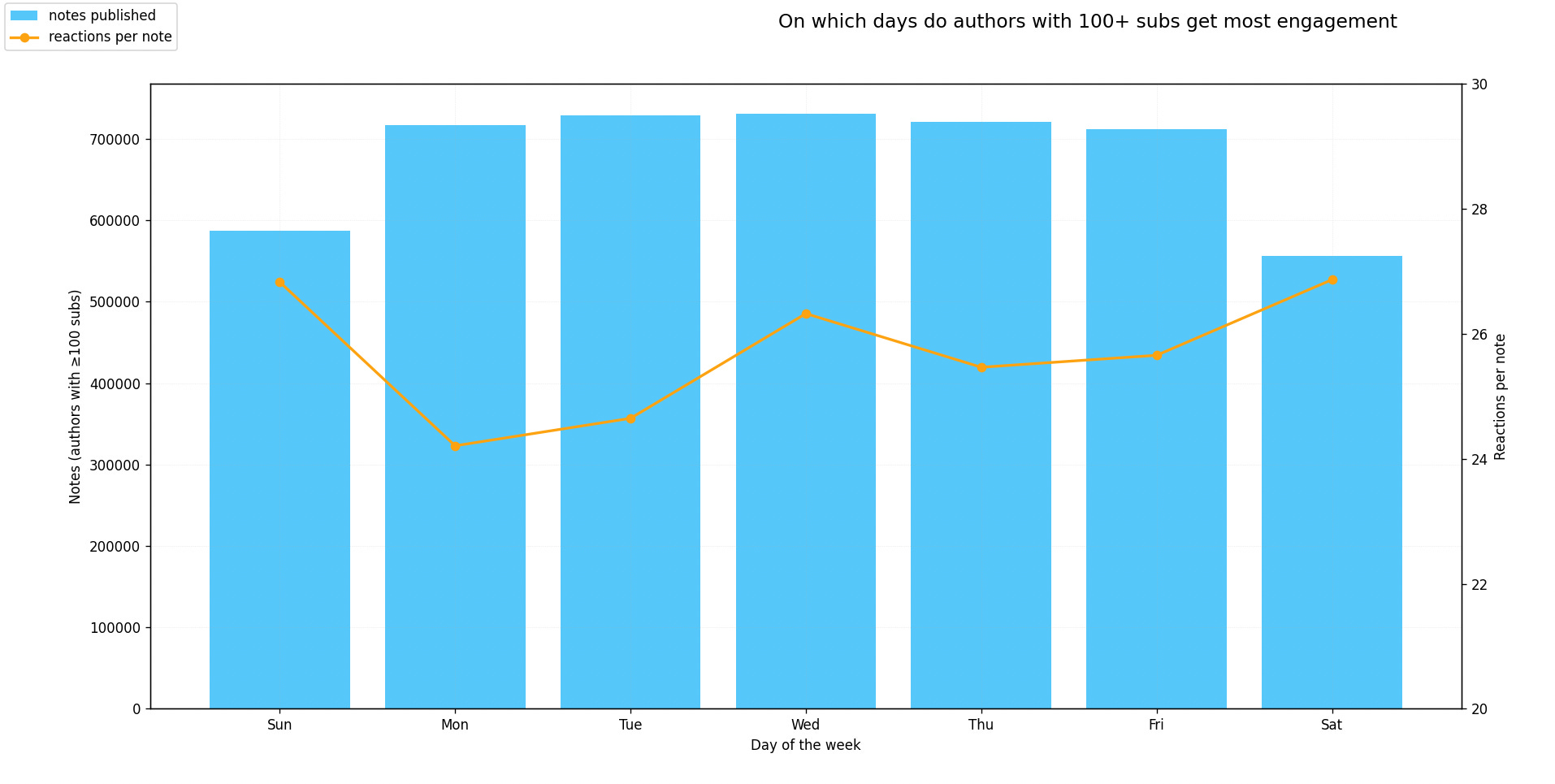
The data shows clear engagement patterns throughout the week, and here’s where it gets interesting:
Sunday and Saturday
deliver the highest engagement per note, clocking in
26.8 likes per note. Yes, the weekend wins again.
Wednesday
holds strong in third place, with 26.3 likes per note.
Monday
sees the highest volume of notes published but ranks lower on engagement, suggesting volume might be diluting attention.
Insight
All the days have around the same engagement average (24.2-26.8).
The reason weekdays have lower EPN (Engagement Per Note) is probably due to the higher volume of Notes posted these days.
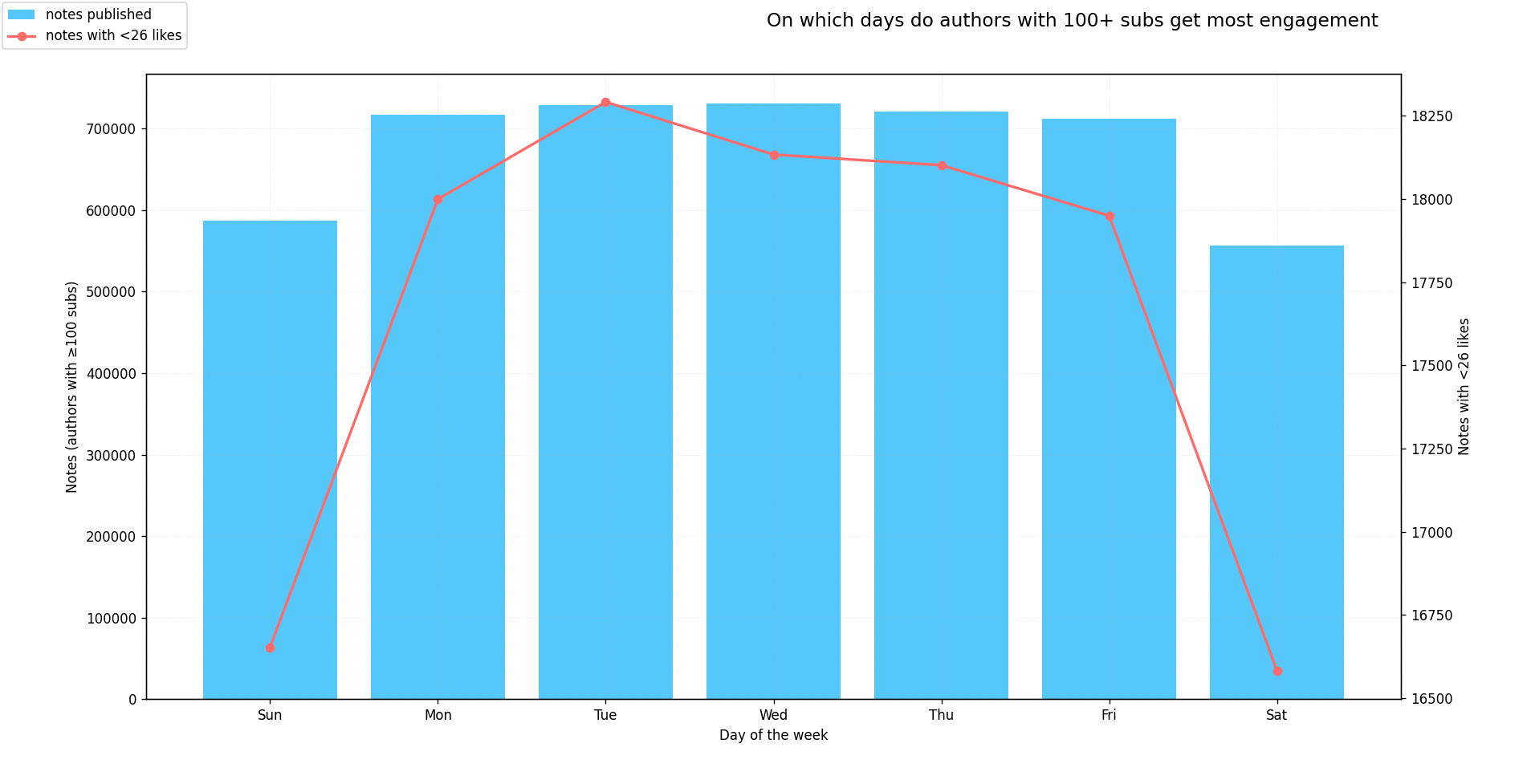
This graph shows that there are more notes with <26 likes.
My guess? During the weekend more people consume content, rather than create it. That’s why the engagement is higher there.
Summary
More people are active on Substack during the week, which gives you a higher chance for more exposure.
During the weekends people are more chill and like to consume more than create.
So if you’re looking to
The Best Hours To Post Notes
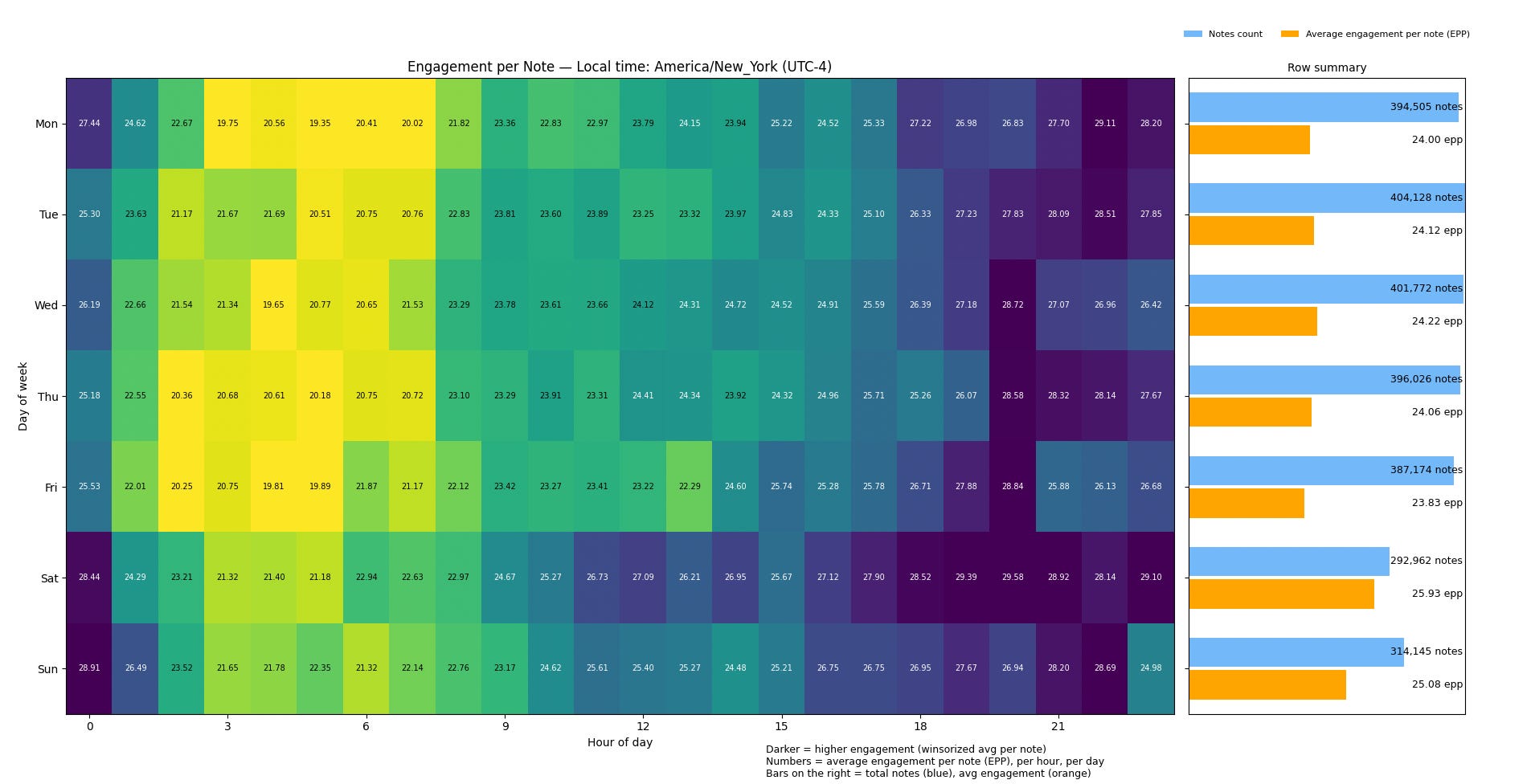
The assumption was always that weekday mornings, prime "coffee break" hours, would naturally be ideal.
The data says otherwise (Used ChatGPT to figure this one out, so enjoy):
Saturday — Engagement King
10:00–14:00
Weekend morning chill. Folks are in bed or on the couch scrolling. No Zoom calls. No stress. Just coffee and catching up on stuff they missed.16:00–22:00
Peak lazy time. They’ve done errands, maybe gone out, and now they’re unwinding. Prime couch-and-phone hours. TV in the background, Notes in hand.23:00
Drunk scroll hour. This is the "I'm not ready to sleep yet" moment. Huge engagement spike.
Sunday
0:00–2:00
Late Saturday night, bleeding into Sunday. Still awake. Still swiping.10:00–13:00
Sunday brunch scroll. Quiet morning. Substack time.16:00–23:00
Classic Sunday night dread. People get reflective, check newsletters, and scroll Notes instead of facing Monday.
🔥 Weeknights (Mon–Fri) - Your safest bet
16:00–23:00
Work's done. People are chilling, snacking, doomscrolling. Substack fits that zone where they want to feel productive without actually doing anything.
Midday Work Breaks
Mon-Fri 13:00–16:00
Quick escape from Slack hell/lunch break scroll/you're supposed to be “working” but you’re not.
Volume of Notes
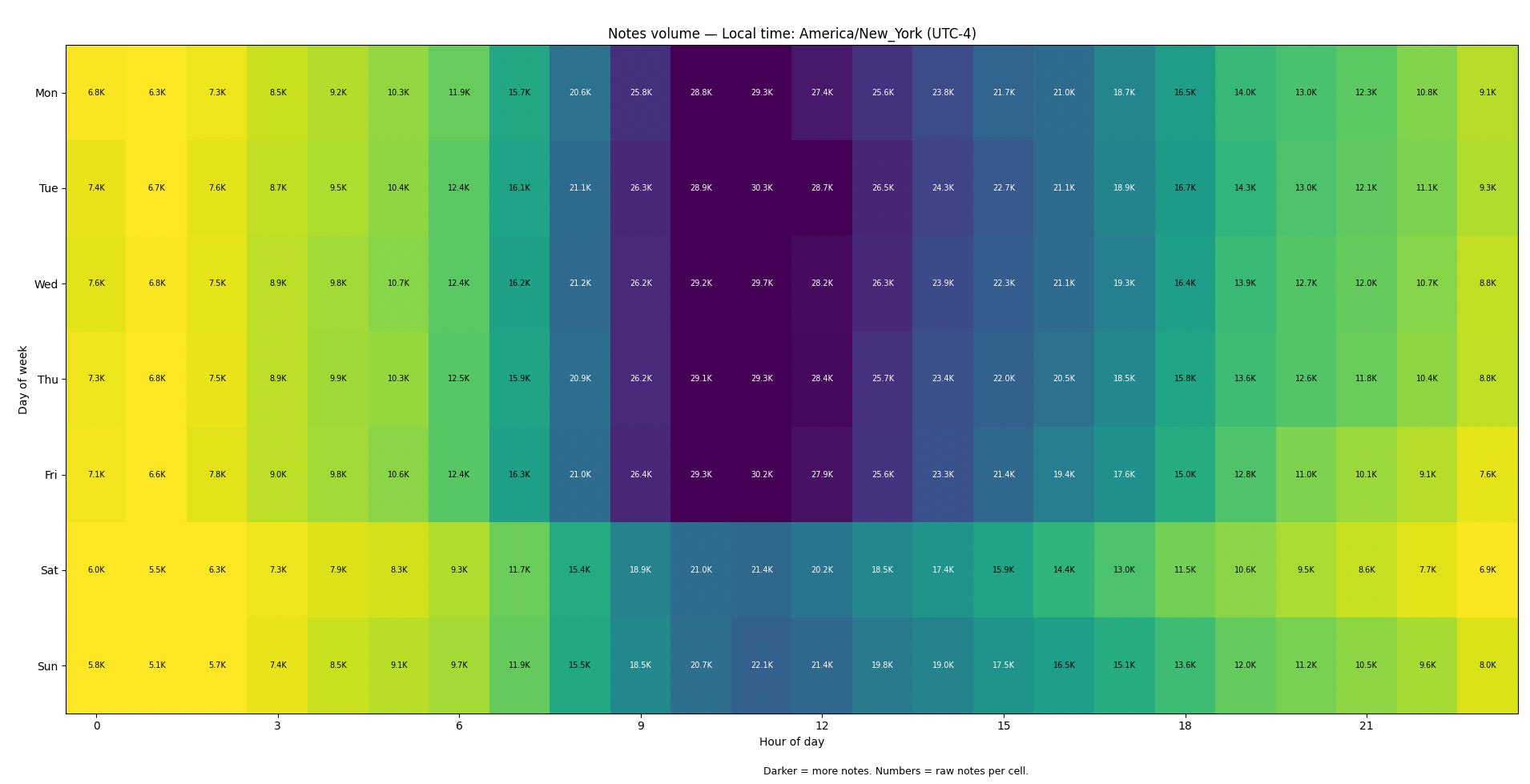
The volume heatmap tells a different story from engagement.
The darkest bands, representing peak posting hours, are weekday late mornings till the afternoon.
This is exactly when engagement per note dips, due to massive competition.
Conversely, the evenings and weekends show much lighter shades, indicating significantly fewer notes posted. Exactly when engagement spikes.
Less competition, more attention per note.
Why This Makes Sense
This inverse relationship between volume and engagement came as a shock to me in the beginning, but then it made tons of sense.
It’s basic supply-and-demand dynamics.
When note volume is high (weekday mornings), creators flood readers with content, spreading attention thin and diluting individual note visibility.
On the other hand, during evenings and weekends, fewer creators post, reducing the overall content supply.
Reader attention remains stable or even increases during leisure hours, meaning each note has far less competition and gets significantly more engagement.
Strategic Timing Recommendations
For Maximum Engagement (Highest Priority)
Weekend Evenings (Saturday & Sunday)
Best Window: 8 PM – 11 PM ET
Why: Highest engagement per note; fewer posts competing for attention.
For Consistent Performance (Weekday Strategy)
Weekday Evenings (Mon–Fri)
Optimal Window: 3 PM – 10 PM ET
Why: Solid, reliable engagement; audience relaxed and scrolling.
Bonus Window (Late-Night)
Midnight Hour (All days)
Time Slot: 12 AM – 1 AM ET
Why: Surprisingly high engagement with minimal posting competition.
When to Avoid Posting
Peak Weekday Mornings (Tue–Thu)
Worst Window: 8 AM – 12 PM ET
Why: Highest posting volume, lowest relative engagement.
How Long Should Your Notes Be
Understanding Reader Psychology
When you're trying to figure out what makes people actually engage with your content, you've got to get inside their heads a bit.
People do not read your Notes. At least not at first.
They first skim the first line/image to figure out if it’s worth their while. And if it is, they’ll click it to read more.
Here's the thing about word count:
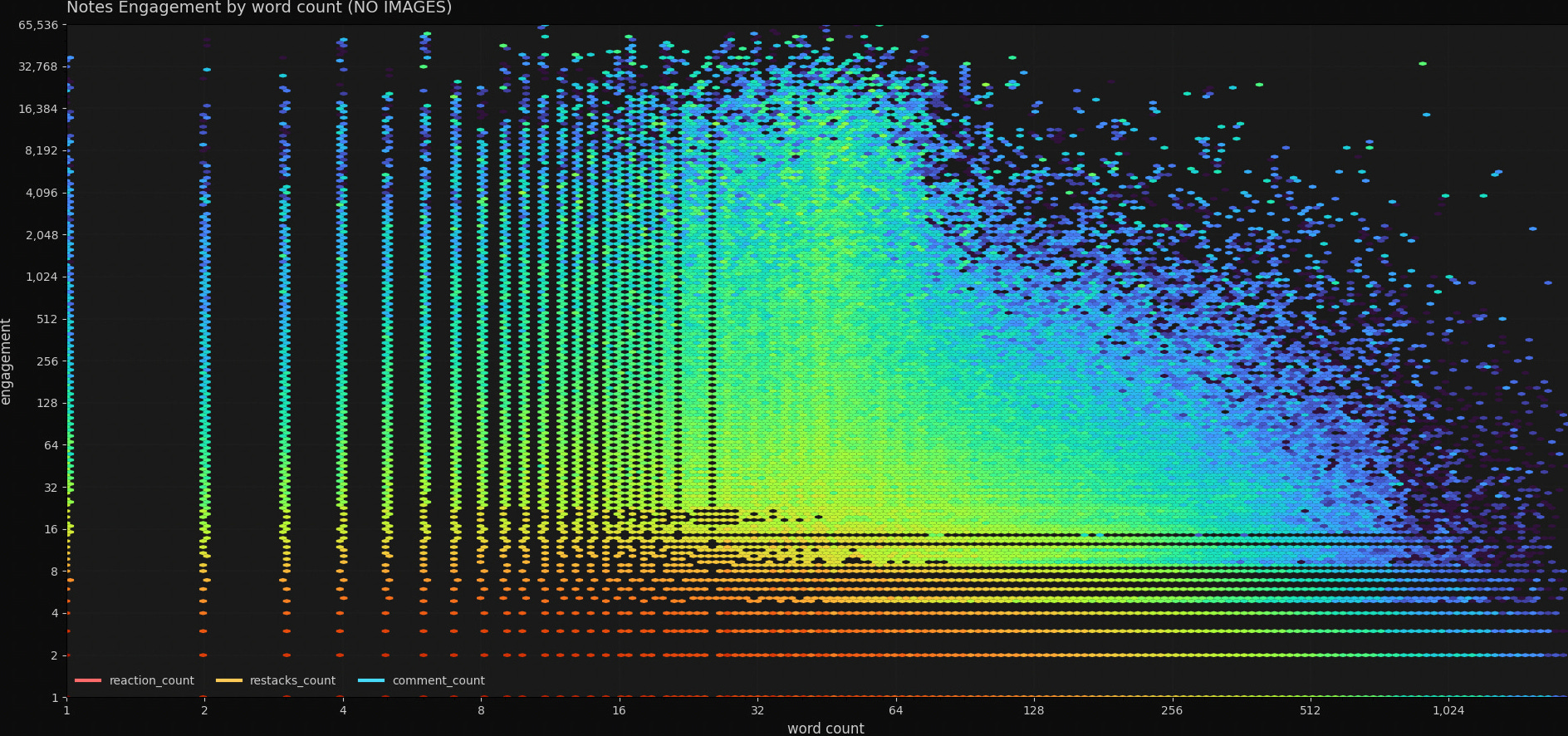
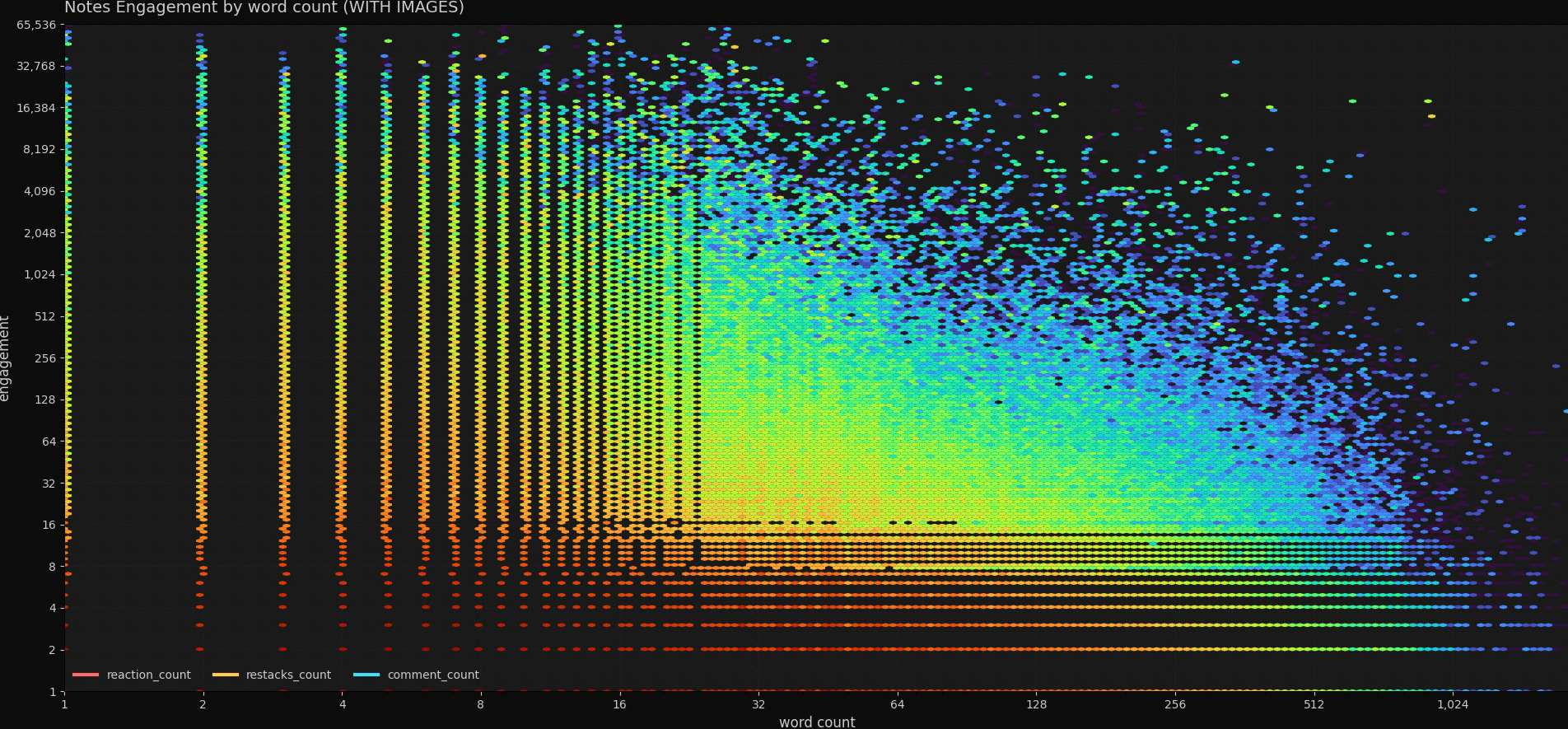
If you write something super short (like under 16 words), there's just not enough meat there for people to care.
Unless you've got a killer image that does the heavy lifting.
On the flip side, go too long and people will get tired just from seeing the length of your Note.
Images Will Give You Wiggle Room
Images are a great way to reduce the amount of text you write, and still get the same amount of engagement.
Here’s Claude’s explanation of it:
They're shortcuts for your brain: People can look at an image and instantly know if your post is worth their time. No mental gymnastics required.
They make people curious: A good image is like a movie trailer for your content. It makes people want to know more.
They stick: We're just wired to remember visual stuff better than text. That image could be the reason someone remembers your post weeks later.
What Actually Works (Based on Real Results)
Snappy Notes (32-64 words): Perfect for those quick insights or interesting stats.
Add a good, self-explanatory image and you're golden for staying visible and increasing the chance of getting engagement.
Build some credibility (64-256 words): This is where you can actually teach something or tell a quick story.
Go deeper when it matters (256-512 words): Save this for topics your audience genuinely cares about. People outside your audience will simply not waste a moment trying to figure out what you write about.
Final Thought
Look, analyzing millions of Notes taught me something I wasn't expecting:
Most creators are doing this backwards.
They're posting when it's convenient for them, not when their audience is actually paying attention.
They're writing these massive walls of text that nobody wants to read. And they're skipping images because they think the words should speak for themselves.
But here's what really matters:
Your audience is scrolling fast, they're distracted, and they're looking for a reason to stop.
Give them that reason with smart timing, the right length, and visuals that actually add something.
The data doesn't lie.
P.S.
If your audience is on the other side of the globe, and you don’t want to wake up a few times every night just to get more engagement, there’s a solution.
I built WriteStack to help you create, manage and schedule your Notes, so they hit your audience at the best time.
And you can use it today for free! Get your 7-day free trial now:
P.P.S
If you sign up in the next 24 hours, I’ll give you a special gift.
I’m curious… what’s your go-to strategy for those 100 subs? Always looking for new growth angles.
Needing this, Orel.